I'm Hamish, co-founder of The Watch Collectors' Club, and over the past few weeks I've added two watches to my collection in about as different a way as possible. One I spent months researching, comparing, and deliberating over. The other I spotted at a preview evening, registered as a bidder, left a maximum bid, and won the following week without even watching the auction. Thinking back, this has actually been a consistent pattern in my collecting — and I thought walking through both purchases might be useful for anyone thinking about buying pre-owned watches for the first time.
My Most Expensive Watch Yet
One of the downsides of running The Watch Collectors' Club is that I see wonderful watches every week, and my list of things I'd like to own someday grows constantly. I've seen gem-set unique pieces, rare historic models, and brand new releases from microbrands that felt perfect for me. Like most people, I can only add to my collection carefully. This year our Geneva Experience focused on high horology — the upper tier of watchmaking, where complications, finishing, and heritage all come together — and after meeting so many brands making exceptional timepieces, I felt it was time to add something from that bracket to my own collection. I did some analysis of my finances, set a budget, and then the research began. I started by thinking through every watch I'd admired recently, the classics I already know I love, and letting my mind wander a little.
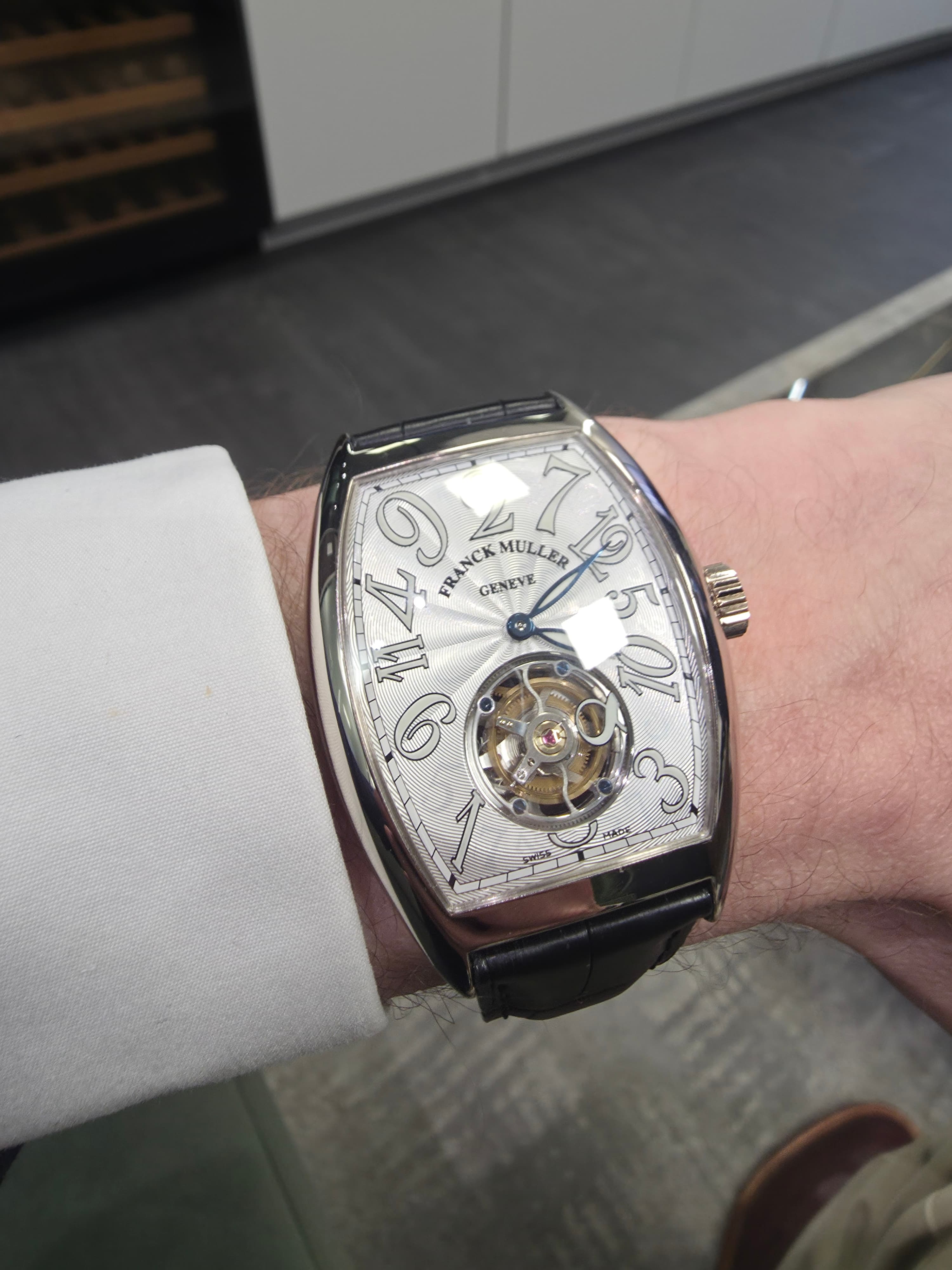
Our visit to Franck Muller in Geneva had stayed with me — I love the Crazy Hours complication, where the hour numerals jump around the dial in a non-sequential order — so I used the Everywatch platform to look at what was available for sale worldwide. I found one in London, went to view it, and discovered it was far too large for my wrist. I knew I simply wouldn't wear it.
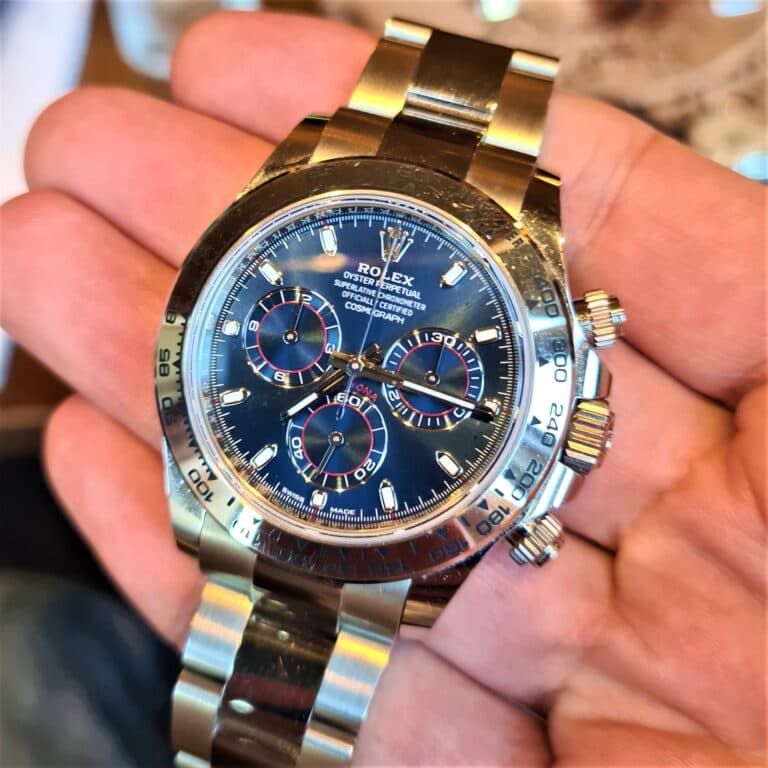
One of our club members during the Geneva trip had been wearing a beautiful "birth-year" Rolex — a classic Day-Date in yellow gold with a champagne dial, chosen because it was made in the year he was born. I was quite taken with it, and there are usually plenty available. I went to view one at pre-owned specialist Watchfinder, and then at London dealer Falco Watches, where they had a particularly rare Oyster Quartz variant that caught my eye. While I was thinking about it, it sold.
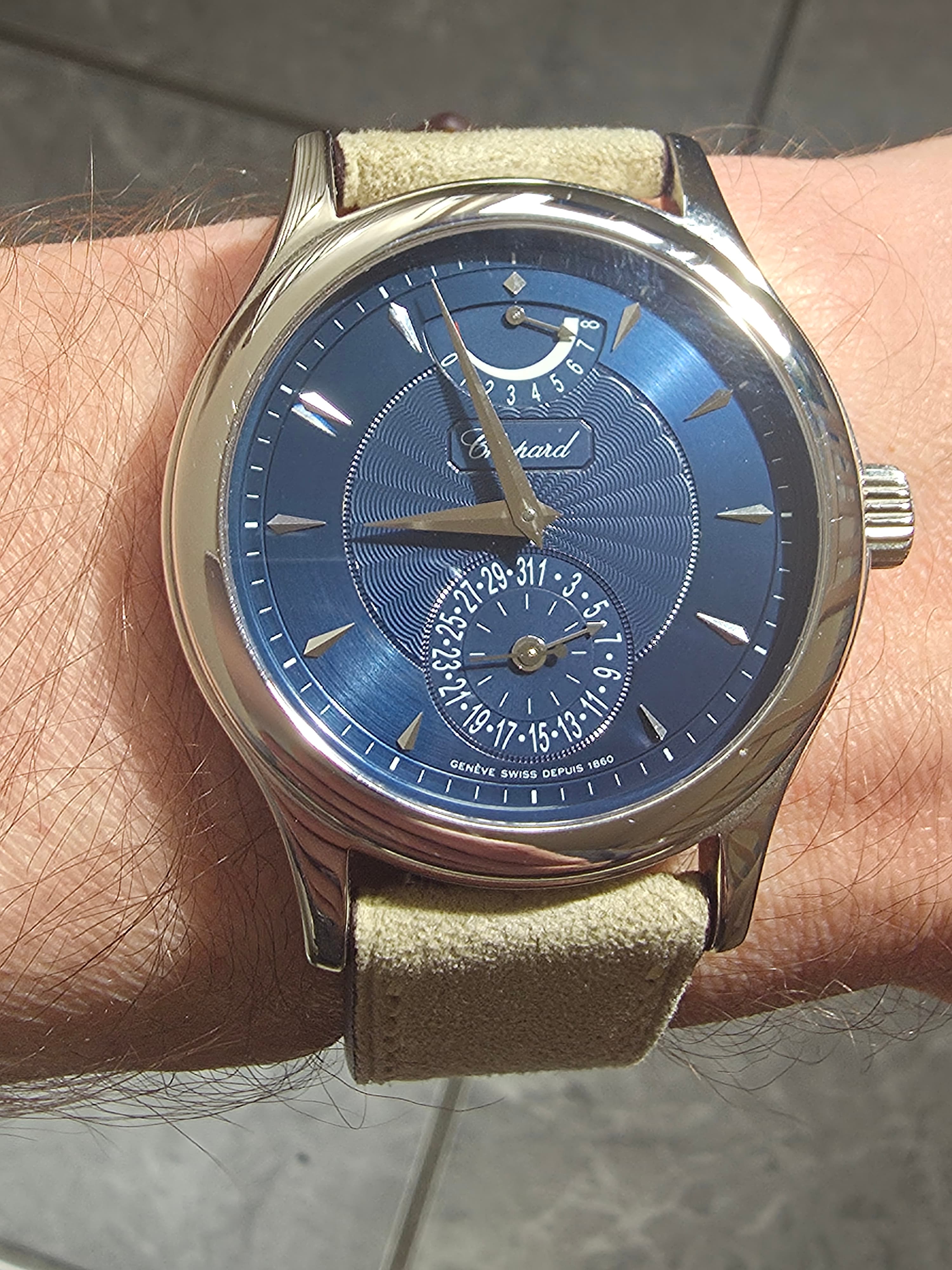
I kept searching — pre-owned Piaget, Hermès, Chopard, Jaeger-LeCoultre — looking for something with an interesting complication, fine finishing, and a proper heritage behind it. Eventually, something came up at London dealer Subdial: a Chopard L.U.C Quattro. This watch has four mainspring barrels to deliver an eight-day power reserve (most mechanical watches run for around 40–48 hours). Eight-day watches do exist elsewhere in the industry, but they tend to be large — think IWC's Big Pilot or various Panerai models. The Quattro manages it in a much more wearable case size, and with movement finishing that puts it firmly in high horology territory.
I booked an appointment to see it. Trying watches on in person matters it’s always great to see how a watch feels on the wrist, not just how it looks in photographs. I always ask the same questions regardless of how reputable the dealer is: has it been serviced, and if so when and by whom? Has it been tested on a timegrapher (a device that measures the accuracy and consistency of a mechanical movement)? Does it have the original box and papers? Who was the seller? Dealers at this level are usually very straightforward about all of this, and asking gives you a much clearer picture of the watch's history. Our post on working with watch dealers covers this in more detail if you want to go deeper. On the way to the appointment, I called in at Falco Watches — and they also had a Quattro. So I was able to examine two examples of the same watch on the same day, from two different dealers, asking the same questions of both. That comparison gave me a lot of confidence and put me in a good position to negotiate.
It's worth knowing that you can negotiate on almost every pre-owned watch purchase, including at auction — you can sometimes buy ahead of a sale at a fixed price, or simply let your bids do the work. The worst a dealer can say is no. You can make an offer, ask for their best price, or propose a part-exchange. We'd only suggest staying polite and realistic about it — opening with 50% below the asking price probably isn't the best approach. I'm now the proud owner of a Chopard Quattro in white gold with a beautiful blue dial. There's nothing else like it in my collection, and I'm looking forward to many years of wear.
The Impulsive Auction Buy
When I first moved to London I bought quite a few watches at auction through Watches of Knightsbridge. I even made the mistake once of attending an auction in person — while it was genuinely useful for examining the watches and asking questions beforehand, I stayed for the sale itself, got carried away, and came home with three watches when I'd only wanted one.
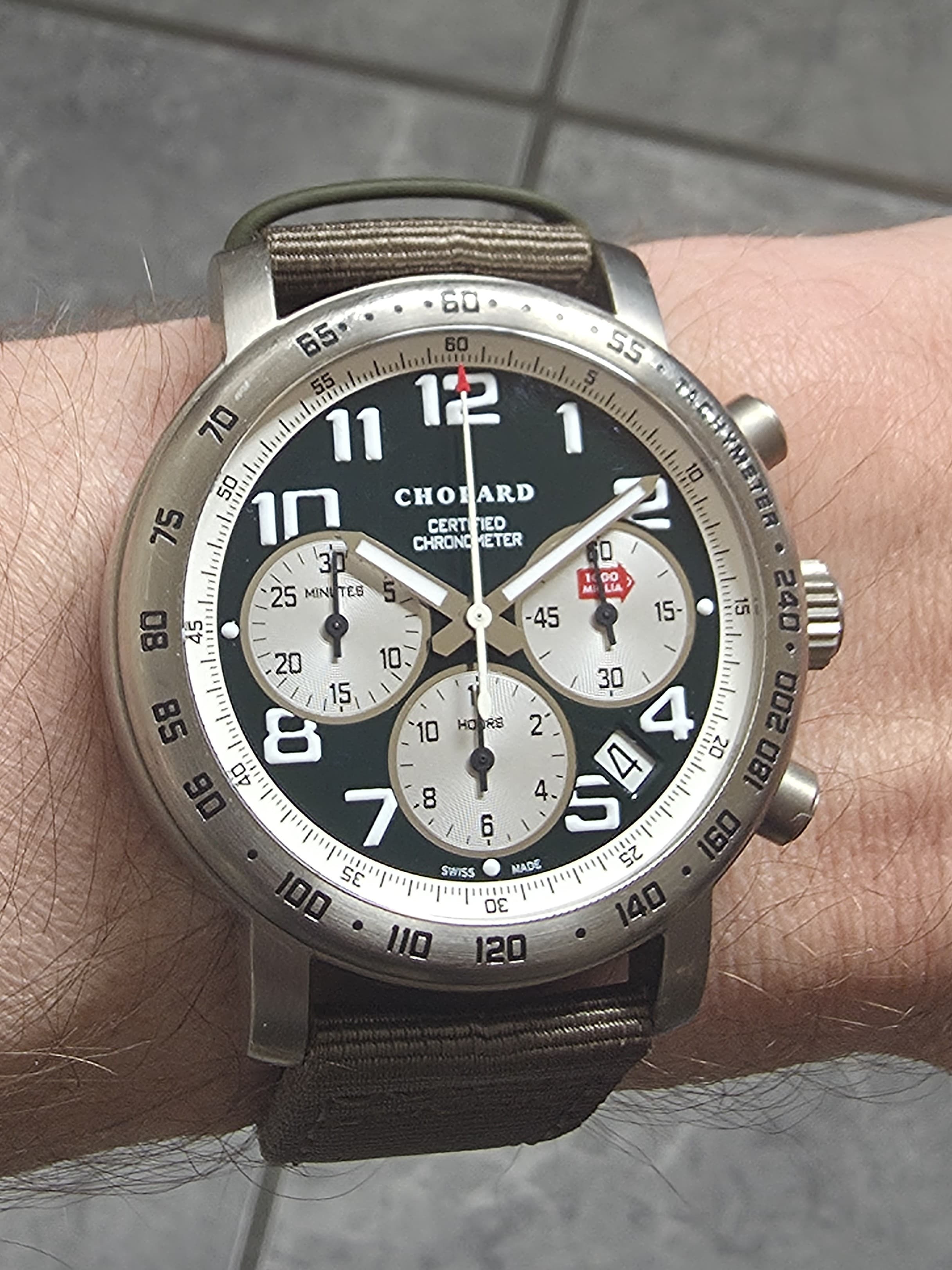
This year we were delighted to have Lyon & Turnbull] sponsor The Glasgow Watch Show and bring along roughly half the watches from their May auction. Their stand was busy all day with collectors going through a wide selection of pre-owned and vintage Cartier, Omega Speedmasters, Rolexes, and more. At a subsequent London event with the Lyon & Turnbull team, I spotted an interesting chronograph — a Chopard Mille Miglia limited edition. Chronographs are watches with an independent seconds mechanism that can be started, stopped, and reset, essentially a stopwatch built into the watch. I've always loved a good sporty chronograph, and this one had a dial so dark green it was almost black, beautiful silver subdials, a tachymetre scale on the fixed bezel, and a sapphire caseback showing the limited edition number. When I tried it on I was pleased to find the case was titanium — light on the wrist despite its size. The auction house knew little about the seller, but the watch came with its original box, sales receipt, and warranty card, which suggested it had only had one owner. Before I left that evening I registered as a potential buyer with Lyon & Turnbull — auction houses all require proof of ID now, so doing it in person at a preview is often the easiest way.
The auction was the following week, which gave me time to research comparable Mille Miglia models using Everywatch and eBay. I decided on a maximum bid, factoring in the buyer's premium — the percentage fee added on top of the hammer price, plus VAT on that premium if you're UK-based — and entered it on their platform. I then got on with work and didn't follow the auction at all. That evening I had an email saying I'd won, at a price well below my maximum and close to the auction minimum. I picked the watch up last week and had completely forgotten it came with the box and papers, which was a very pleasant surprise. Our guide to buying watches at auction covers the full process if you're thinking about trying it yourself.
Two Completely Different Kinds of Fun
Both purchases were genuinely enjoyable, just in completely different ways. One required research, comparison shopping, careful judgement, and a bit of negotiation. The other was more spontaneous — I left what I felt was a low but fair bid, and I genuinely wouldn't have minded if I hadn't won it. We love hearing how people found their latest purchase, whether it was a months-long hunt for a specific reference or a split-second decision at an auction preview. It's usually one of the first things that comes up at our meetups when someone turns up with something new on their wrist. If you'd like to share your own story or see some interesting watches in person, come along to one of our upcoming events.


Subscribe to newsletter
Subscribe to receive the latest blog posts to your inbox every week.
By subscribing you agree to with our Privacy Policy.
Continue exploring
Dive into more content from The Watch Collectors Club.